

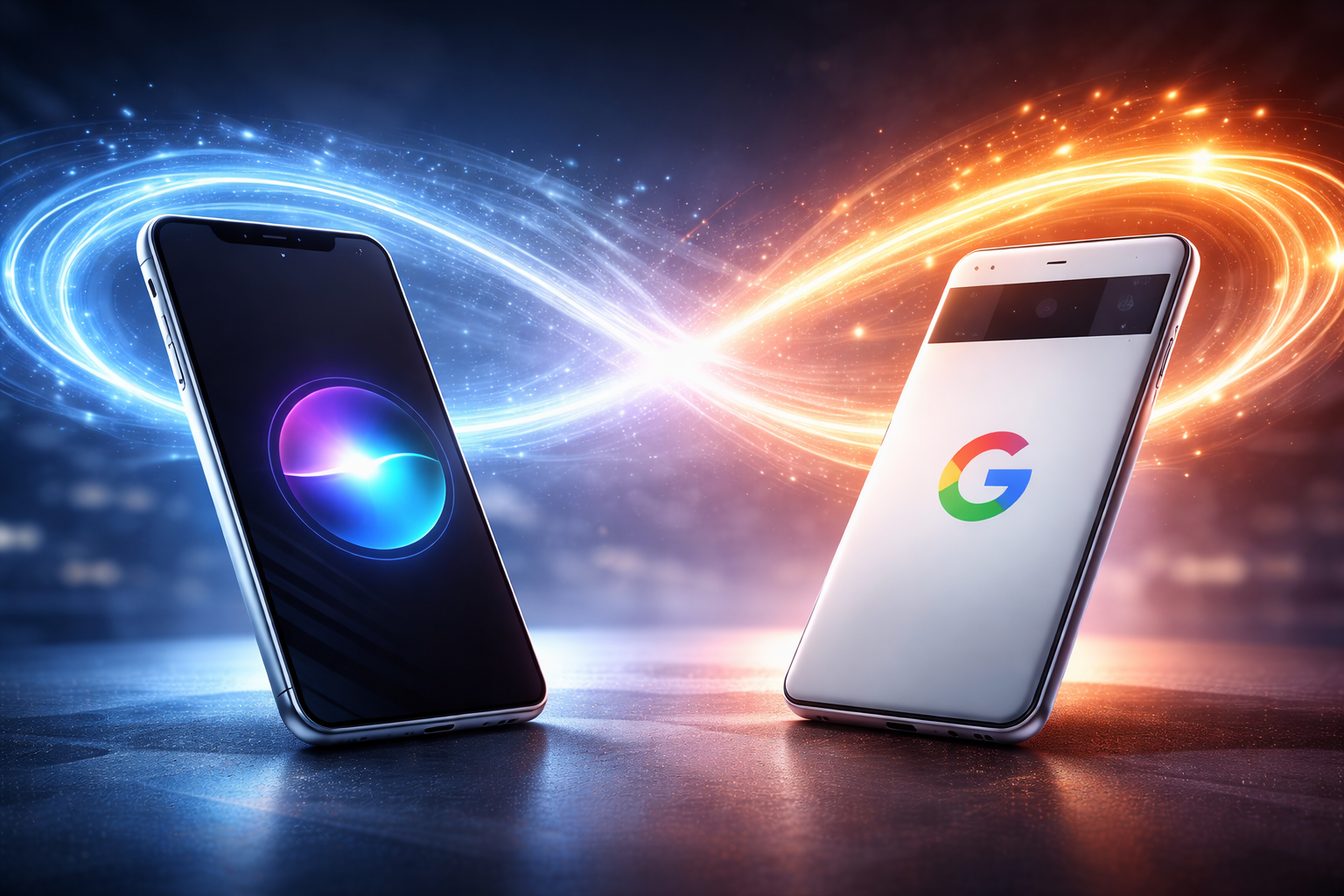
After months of speculation, Apple and Google have finally made it official. Siri’s long-awaited overhaul will be built on Google’s Gemini AI technology. But focusing only on Siri misses the real story. This partnership marks a deeper, multi-year alignment that could reshape how Apple delivers AI features across its entire ecosystem.
Here’s what Apple and Google actually agreed to—and why it matters far beyond voice commands.
The confirmation everyone was waiting for
In a rare joint statement, Apple and Google confirmed that the next generation of Apple’s in-house AI models—called Apple Foundation Models—will be based on Google’s Gemini models and cloud technology.
According to the companies, these models will power future Apple Intelligence features, including a more personalized and capable Siri expected to arrive later this year.
Apple says it evaluated multiple AI options and concluded that Google’s technology offered the strongest foundation to build on—an unusually direct acknowledgment from a company known for keeping its AI stack tightly controlled.
This isn’t “Siri becomes Gemini”
It’s important to clear up a common misconception. Siri isn’t being replaced by Gemini, nor is Apple turning Siri into a Google product.
Instead, Apple is using Gemini as the underlying AI engine—the foundation layer—while still designing Siri’s personality, behavior, integrations, and user experience itself. Think of it as Apple building its own AI house, but choosing Google’s concrete and steel for the structure.
The revamped Siri is widely expected to roll out with the OS 26.4 updates, likely around March or April, although Apple’s statement only commits to a launch sometime “this year.”
The real headline: a multi-year AI partnership
The bigger takeaway is that this is not a one-off Siri upgrade. Apple and Google describe the deal as a multi-year collaboration aimed at powering future Apple Intelligence features.
Apple hasn’t shared specifics, but the wording strongly suggests that upcoming AI tools—possibly across Photos, Messages, productivity apps, and system-level features—will also rely on this Gemini-based foundation.
That timeline likely stretches into Apple’s next major platform updates, with additional AI features expected to debut in OS 27, which Apple is set to preview at WWDC later this summer.
Privacy stays firmly in Apple’s hands
One concern users may have is obvious: if Apple is using Google AI, does that mean Apple Intelligence runs on Google’s servers?
Apple addressed that head-on. According to the statement, Apple Intelligence features will run on-device and on Apple’s own Private Cloud Compute infrastructure—not on Google’s servers.
In other words, Google provides the AI models and cloud technology foundation, but Apple controls how and where your data is processed, maintaining its long-standing privacy stance.
Why Apple turning to Google is a big deal
For years, Apple has preferred building critical technologies internally. Partnering so deeply with Google—especially in AI, one of the most strategic areas in tech today—signals how fast the AI landscape is moving.
It also reflects a broader industry trend: even the biggest players are mixing in-house design with best-in-class external models to stay competitive against rivals like OpenAI, Microsoft, and Meta.
If this partnership works, Apple could deliver smarter AI features faster—without sacrificing its ecosystem control or privacy promises.
The bottom line
Siri running on Gemini is just the starting point. What Apple and Google have confirmed is a long-term AI alliance that could quietly redefine Apple Intelligence over the next several years.
The big question now: will this collaboration give Apple the AI leap it needs—or will users still expect more compared to rivals like ChatGPT and Copilot? Let us know what you think.